

Introduction
Asteroid 99942 Apophis captured global attention shortly after its discovery in 2004, when early calculations suggested a small but alarming chance of an Earth impact in 2029. At the time, limited observational data created large uncertainties in its predicted trajectory. Over the following two decades, continuous tracking and radar measurements transformed Apophis from a previously feared impact threat into one of the most scientifically valuable near-Earth asteroids ever observed.
Will Apophis hit Earth in 2029?
No. On 13/04/29 Apophis will pass at a distance of around 20,000 miles or 33,000km.
What Exactly Is Asteroid Apophis?
- Near-Earth asteroid belonging to the Aten group, with an orbit that crosses Earth’s path.
- S-type (stony) composition, dominated by silicate minerals mixed with iron and nickel.
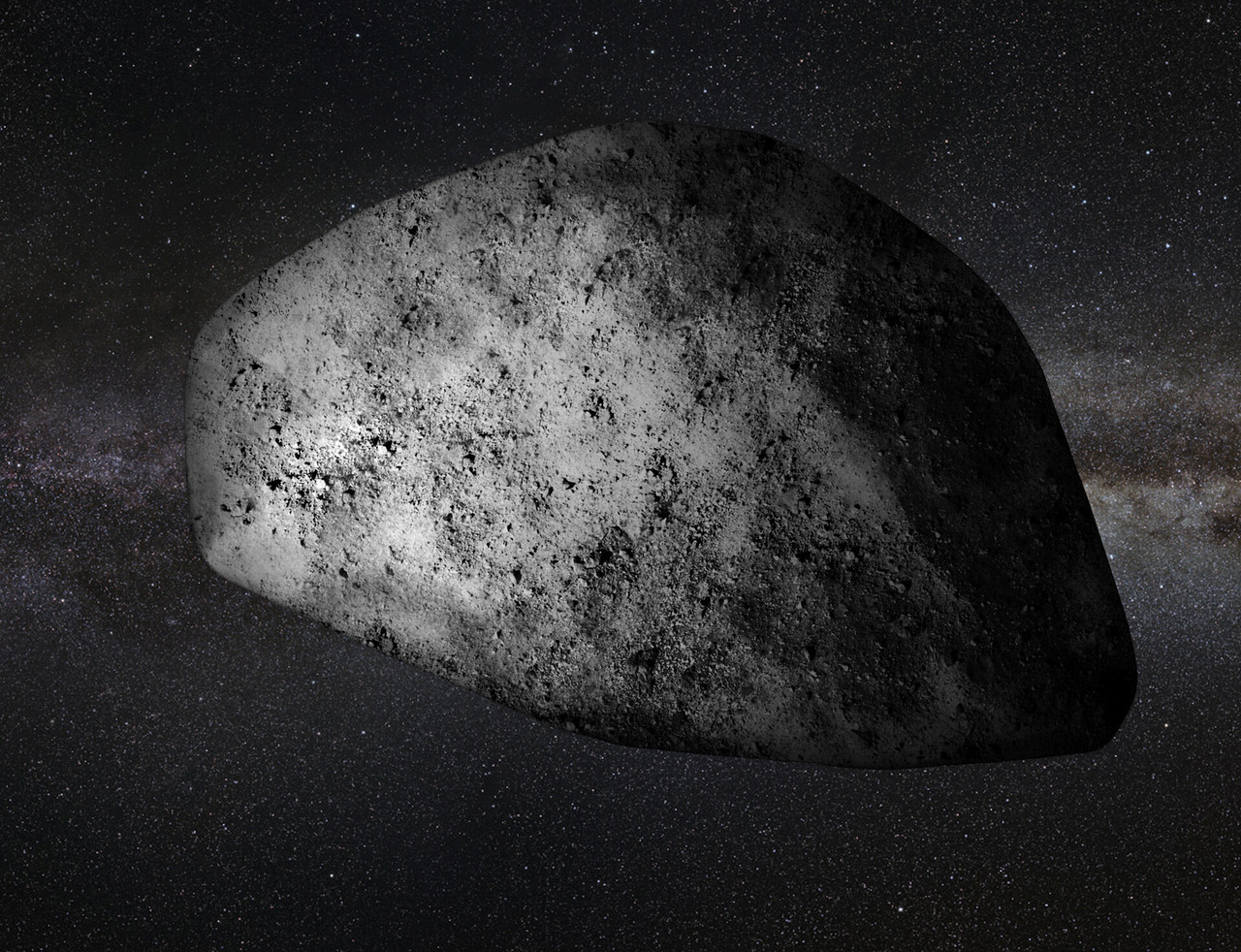
- Approximate diameter of ~340 metres, with an elongated, bi-lobed “peanut-like” shape.
- High reflectivity (albedo ~0.30) and thermal inertia of ~250–800 J m⁻² s⁻⁰.⁵ K⁻¹.
- Estimated mass between 4.4–6.2 × 10¹⁰ kg.
- Complex rotation state: ~31-hour rotation around its short axis and a slow ~264-hour tumbling motion.
- Likely a rubble-pile asteroid, held together by gravity rather than solid rock.
Discovery and the Early Impact Scare
Apophis was discovered on 19 June 2004 by astronomers at the Kitt Peak National Observatory. Initial observations covered only a short portion of its orbit, resulting in significant uncertainties. By late 2004, Apophis briefly reached Level 4 on the Torino Scale, with the estimated probability of a 2029 impact peaking at 2.7%.
Media coverage amplified public concern, often overstating the risk. However, the scientific response focused on improving observational coverage rather than speculation.
Orbital Refinements and Current Risk Status
Subsequent optical tracking and radar observations from facilities such as Arecibo and Goldstone dramatically refined Apophis’s orbit. These measurements ruled out a 2029 impact and later eliminated potential impact scenarios in 2036 and 2068.
- All known impact probabilities eliminated.
- Removed from NASA’s Sentry Risk Table in 2021.
- No credible impact threat for at least the next century.
The 2029 Flyby: A Rare Scientific Opportunity
On 13 April 2029, Apophis will pass approximately 32,000 km above Earth’s surface — closer than geostationary satellites. Under dark skies, it may be visible to the naked eye.
This encounter will allow scientists to observe how Earth’s gravity affects a real asteroid in real time:
- Gravitational tidal forces will alter Apophis’s spin state.
- Surface regolith may shift or trigger landslides.
- Its orbit will expand, reclassifying it from an Aten to an Apollo-class asteroid.
- Post-flyby orbital period will increase to ~1.2 years.
Orbital Mechanics and Long-Term Behaviour
Before 2029, Apophis completes an orbit around the Sun roughly every 0.9 years. Earth’s gravitational influence during the flyby will permanently reshape that orbit.
Over longer timescales, subtle forces such as the Yarkovsky effect — a tiny thrust caused by uneven heat radiation — will continue to influence its trajectory. Minor gravitational interactions with other asteroids may also introduce very small orbital changes, though none pose a known hazard.
Why Apophis Matters for Planetary Science
- Demonstrates how early impact fears can be resolved through precision tracking.
- Provides a real-world test case for asteroid tidal deformation.
- Improves models of rubble-pile asteroid stability.
- Enhances planetary defence strategies and public understanding.
Common Misconceptions About Apophis (Debunked)
Misconception 1: Apophis will hit Earth in 2029
This is false. The 2029 impact scenario was ruled out years ago using radar observations. Apophis will safely pass Earth.
Misconception 2: NASA is “hiding” new impact data
Apophis’s orbit is publicly tracked by multiple international observatories. All data is openly available through NASA and ESA databases.
Misconception 3: Apophis is a solid metal asteroid
Apophis is an S-type rubble-pile asteroid, not a solid iron body. This greatly affects how it responds to gravitational forces.
Misconception 4: The flyby could destabilise Earth or the Moon
Apophis is far too small to have any measurable effect on Earth or the Moon. Only the asteroid itself will be altered.
Conclusion
Asteroid Apophis stands as one of the clearest examples of how scientific uncertainty evolves into precision understanding. Once considered a potential global threat, it is now recognised as a once-in-a-lifetime research opportunity. The 2029 flyby will provide unprecedented insight into asteroid dynamics, surface physics, and gravitational interactions — knowledge that will directly inform future planetary defence efforts.
Sources
-
Giorgini, J. D., et al. (2008).
Predicting the Earth encounter of asteroid 99942 Apophis.
https://doi.org/10.48550/arXiv.0801.1234
-
Farnocchia, D., & Chesley, S. R. (2015).
Orbit determination and impact monitoring for asteroid Apophis.
Icarus, 258, 18–29.
https://doi.org/10.1016/j.icarus.2015.03.024
-
NASA Center for Near-Earth Object Studies (CNEOS).
99942 Apophis Overview.
https://cneos.jpl.nasa.gov/ca/apophis.html
- Image Credit: European Space Agency
Further Reading and Similar Articles
Planetary Defense & Asteroids
Introduction
Asteroid 99942 Apophis captured global attention shortly after its discovery in 2004, when early calculations suggested a small but alarming chance of an Earth impact in 2029. At the time, limited observational data created large uncertainties in its predicted trajectory. Over the following two decades, continuous tracking and radar measurements transformed Apophis from a previously feared impact threat into one of the most scientifically valuable near-Earth asteroids ever observed.
Will Apophis hit Earth in 2029?
No. On 13/04/29 Apophis will pass at a distance of around 20,000 miles or 33,000km.
What Exactly Is Asteroid Apophis?
- Near-Earth asteroid belonging to the Aten group, with an orbit that crosses Earth’s path.
- S-type (stony) composition, dominated by silicate minerals mixed with iron and nickel.
- Approximate diameter of ~340 metres, with an elongated, bi-lobed “peanut-like” shape.
- High reflectivity (albedo ~0.30) and thermal inertia of ~250–800 J m⁻² s⁻⁰.⁵ K⁻¹.
- Estimated mass between 4.4–6.2 × 10¹⁰ kg.
- Complex rotation state: ~31-hour rotation around its short axis and a slow ~264-hour tumbling motion.
- Likely a rubble-pile asteroid, held together by gravity rather than solid rock.
Discovery and the Early Impact Scare
Apophis was discovered on 19 June 2004 by astronomers at the Kitt Peak National Observatory. Initial observations covered only a short portion of its orbit, resulting in significant uncertainties. By late 2004, Apophis briefly reached Level 4 on the Torino Scale, with the estimated probability of a 2029 impact peaking at 2.7%.
Media coverage amplified public concern, often overstating the risk. However, the scientific response focused on improving observational coverage rather than speculation.
Orbital Refinements and Current Risk Status
Subsequent optical tracking and radar observations from facilities such as Arecibo and Goldstone dramatically refined Apophis’s orbit. These measurements ruled out a 2029 impact and later eliminated potential impact scenarios in 2036 and 2068.
- All known impact probabilities eliminated.
- Removed from NASA’s Sentry Risk Table in 2021.
- No credible impact threat for at least the next century.
The 2029 Flyby: A Rare Scientific Opportunity
On 13 April 2029, Apophis will pass approximately 32,000 km above Earth’s surface — closer than geostationary satellites. Under dark skies, it may be visible to the naked eye.
This encounter will allow scientists to observe how Earth’s gravity affects a real asteroid in real time:
- Gravitational tidal forces will alter Apophis’s spin state.
- Surface regolith may shift or trigger landslides.
- Its orbit will expand, reclassifying it from an Aten to an Apollo-class asteroid.
- Post-flyby orbital period will increase to ~1.2 years.
Orbital Mechanics and Long-Term Behaviour
Before 2029, Apophis completes an orbit around the Sun roughly every 0.9 years. Earth’s gravitational influence during the flyby will permanently reshape that orbit.
Over longer timescales, subtle forces such as the Yarkovsky effect — a tiny thrust caused by uneven heat radiation — will continue to influence its trajectory. Minor gravitational interactions with other asteroids may also introduce very small orbital changes, though none pose a known hazard.
Why Apophis Matters for Planetary Science
- Demonstrates how early impact fears can be resolved through precision tracking.
- Provides a real-world test case for asteroid tidal deformation.
- Improves models of rubble-pile asteroid stability.
- Enhances planetary defence strategies and public understanding.
Common Misconceptions About Apophis (Debunked)
Misconception 1: Apophis will hit Earth in 2029
This is false. The 2029 impact scenario was ruled out years ago using radar observations. Apophis will safely pass Earth.
Misconception 2: NASA is “hiding” new impact data
Apophis’s orbit is publicly tracked by multiple international observatories. All data is openly available through NASA and ESA databases.
Misconception 3: Apophis is a solid metal asteroid
Apophis is an S-type rubble-pile asteroid, not a solid iron body. This greatly affects how it responds to gravitational forces.
Misconception 4: The flyby could destabilise Earth or the Moon
Apophis is far too small to have any measurable effect on Earth or the Moon. Only the asteroid itself will be altered.
Conclusion
Asteroid Apophis stands as one of the clearest examples of how scientific uncertainty evolves into precision understanding. Once considered a potential global threat, it is now recognised as a once-in-a-lifetime research opportunity. The 2029 flyby will provide unprecedented insight into asteroid dynamics, surface physics, and gravitational interactions — knowledge that will directly inform future planetary defence efforts.
Sources
- Giorgini, J. D., et al. (2008). Predicting the Earth encounter of asteroid 99942 Apophis. https://doi.org/10.48550/arXiv.0801.1234
- Farnocchia, D., & Chesley, S. R. (2015). Orbit determination and impact monitoring for asteroid Apophis. Icarus, 258, 18–29. https://doi.org/10.1016/j.icarus.2015.03.024
- NASA Center for Near-Earth Object Studies (CNEOS). 99942 Apophis Overview. https://cneos.jpl.nasa.gov/ca/apophis.html
- Image Credit: European Space Agency