
More Extraordinary Claims, Zero Public Proof: The HUGE Problem With Jay Stratton’s Extraterrestrial Technology Allegations
When a former senior intelligence official claims the US government has recovered alien spacecraft and is secretly reverse-engineering them, the public is entitled to ask the most simplest of questions: where is the evidence to support the claims?
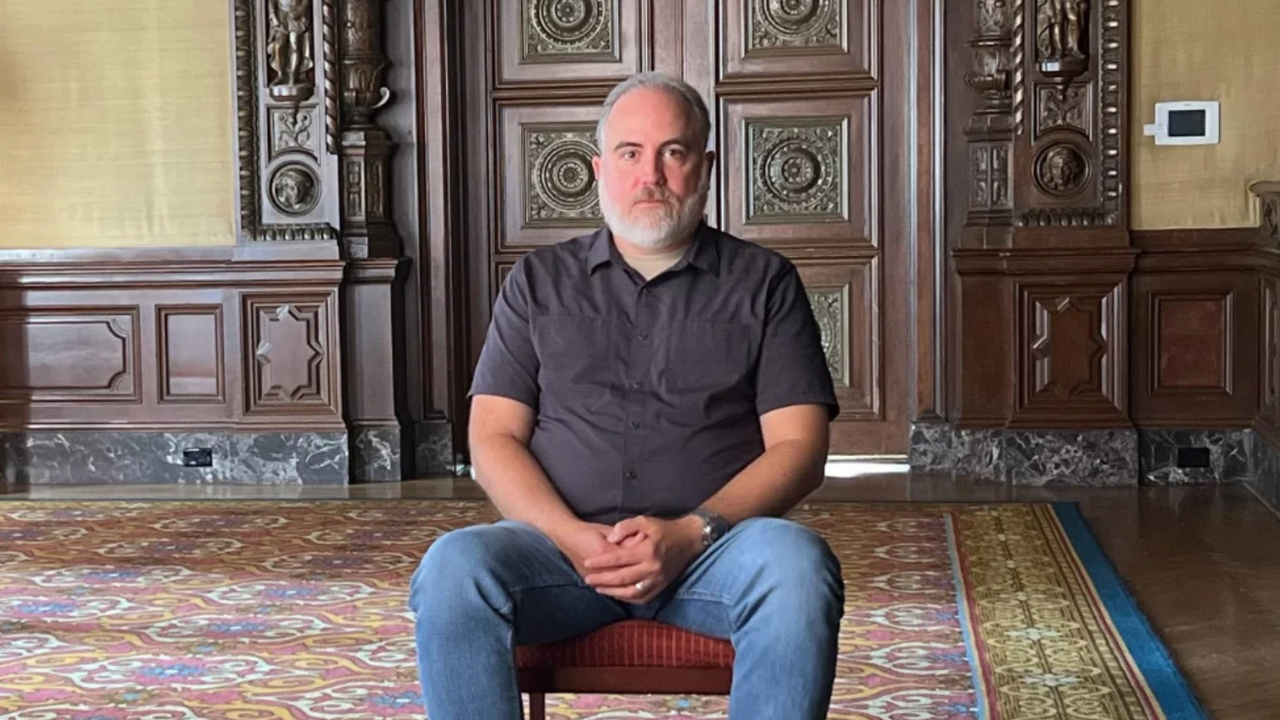
Jay Stratton is not an ordinary UFO enthusiast. As a former senior US intelligence official and head of the Pentagon’s Unidentified Aerial Phenomena Task Force, he occupied a position that gave him access to information unavailable to the general public.
That background makes his allegations worthy of attention. But it also makes the absence of publicly verifiable evidence all the more striking.
Stratton has claimed that the US government possesses technology of non-human origin, that secret programmes have recovered craft and that efforts have been made to reverse-engineer the technology. These are extraordinary allegations with enormous implications for science, national security and our understanding of humanity’s place in the universe.
Yet the fundamental question remains unanswered: what evidence can the public actually examine to establish that any of this is true?
Authority Is Not Evidence
One of the most persistent problems in the UFO debate is the tendency to confuse a witness’s professional credentials with proof of the witness’s conclusions.
Stratton’s intelligence background gives him a legitimate basis for discussing his experiences and the investigations he was involved in. It does not automatically establish that the information he encountered was accurate, that the people supplying it were telling the truth, or that any unidentified objects were extraterrestrial in origin.
Intelligence officials routinely work with incomplete information, conflicting reports and sources whose reliability must be assessed. Information can be classified without being correct. Multiple people can repeat the same allegation without providing independent corroboration.
There is a crucial difference between saying, “I was told that the government possesses alien technology,” and demonstrating that the government possesses alien technology.
If Stratton has personally encountered compelling evidence, the public deserves to know what that evidence establishes, rather than simply being asked to trust his interpretation of it.
The Convenient Shield of Secrecy
Whenever questions arise about the lack of physical evidence, classification inevitably enters the discussion.
The argument is familiar: the evidence exists, but the government will not permit it to be disclosed.
National security restrictions are real, and there are legitimate reasons why intelligence operations, sensitive military capabilities and certain technical details cannot be made public. But secrecy cannot become an all-purpose justification for treating an unverified allegation as an established fact.
A classified document is not necessarily an accurate document. An intelligence report recording somebody’s claim does not prove the claim. A briefing that discusses a suspected programme does not establish that the programme successfully recovered extraterrestrial technology.
Nor does a security review of a book amount to official confirmation of its contents. Such a review concerns the release of information under applicable security rules; it is not a scientific validation of the author’s assertions.
If recovered alien technology genuinely exists, there should be some means of establishing that fact through authenticated records, properly documented physical material, credible independent examination or evidence presented to authorised oversight bodies.
The public may not be entitled to every classified detail. It is, however, entitled to distinguish between a claim that evidence exists and evidence that can actually establish the claim.
What Did the Pentagon’s Own Investigation Find?
The issue becomes even more significant when considered alongside the Pentagon’s All-domain Anomaly Resolution Office, known as AARO.
In its 2024 historical report, AARO stated that it had found no empirical evidence that the US government or private companies had reverse-engineered extraterrestrial technology. Its investigation examined historical allegations about secret programmes and accounts of purported recovered craft.
The report did not satisfy everyone who believes the government has concealed information about UFOs. Critics have questioned the investigation’s scope, its access to information and its conclusions.
But disagreement with an investigation does not establish the opposite conclusion.
If Stratton believes AARO reached the wrong result, the strongest response would be to produce evidence that its findings failed to account for. Simply asserting that a secret programme exists beyond the investigators’ reach leaves the public with two competing accounts and no independently accessible means of resolving the dispute.
That is precisely why documentary corroboration and physical evidence matter.
A Memoir, a Media Campaign and a Financial Incentive
There is another issue that deserves scrutiny: the commercial context in which these claims are being presented.
Stratton’s memoir, Out of the Shadows, brings his account to a wider audience. Allegations involving recovered alien craft, hidden government programmes and attempts to reproduce non-human technology are naturally likely to attract enormous public interest.
That creates an obvious commercial incentive. A book promising revelations about humanity’s first contact with non-human technology has a far more compelling proposition than a book recounting the bureaucratic difficulties of investigating unexplained aerial observations.
This does not prove dishonesty. People can sincerely believe their claims while also benefiting financially from public attention. A commercially successful book can contain true statements, false statements or a mixture of both.
Nevertheless, financial incentives are relevant when evaluating testimony. They are a reason to demand corroboration, not a substitute for it.
The same standard should apply to anyone who claims to possess extraordinary knowledge: politicians, intelligence officials, scientists, whistleblowers and authors alike.
Unidentified Does Not Mean Extraterrestrial
Another persistent problem is the tendency to collapse several very different propositions into one.
An unidentified aerial phenomenon is an observation that has not been satisfactorily identified. It may be the result of incomplete sensor data, an unfamiliar aircraft, an atmospheric effect, an instrument error or something that remains unexplained.
Establishing that an object is unusual is not the same as establishing that it is non-human. Establishing that it is non-human would still not automatically demonstrate that it originated beyond Earth. And demonstrating an extraterrestrial origin would be different again from proving that a government recovered the object and has been reverse-engineering it.
Each step requires additional evidence.
A witness can be entirely sincere about seeing something inexplicable and still be mistaken about what it was. Even experienced intelligence professionals are not immune to that possibility.
The responsible response to an unexplained observation is to investigate it, not to treat the most extraordinary possible explanation as the default conclusion.
Where Is the Independently Verifiable Proof?
The public does not need another dramatic assertion. It needs evidence capable of surviving independent scrutiny.
That could include authenticated records documenting a specific recovery, a verifiable chain of custody for physical material, original technical data that experts can examine, or independently corroborated documentation connecting the alleged objects to an identifiable programme.
If the material is too sensitive for immediate public release, authorised independent oversight could still help establish whether the claims have a factual foundation.
And if the evidence is genuinely compelling, its significance should not depend entirely on the reputation of the person describing it.
Science advances by testing claims against observations. History establishes events through records and corroboration. Investigative journalism demands documents, sources and verification. A claim about alien technology should not be exempt from these basic standards simply because the subject is fascinating.
The Burden of Proof Has Not Changed
There is an understandable attraction to the idea that governments have discovered something extraordinary and concealed it from the world. The possibility of non-human technology is fascinating, and questions about unexplained aerial phenomena deserve serious investigation.
But curiosity is not confirmation, and suspicion is not proof.
Jay Stratton’s professional background makes his allegations worth examining. It does not entitle those allegations to be accepted without evidence. If he has access to information that establishes the existence of recovered extraterrestrial technology, the most consequential contribution he could make would be to provide a verifiable basis for that conclusion.
Until then, the distinction between what he says he knows and what has actually been demonstrated remains fundamental.
Perhaps there is classified information that has not been disclosed. Perhaps some observations remain unexplained. Neither proposition establishes that the United States possesses alien spacecraft or has successfully reverse-engineered their technology.
The public should not have to choose between blind trust in government institutions and blind trust in former government officials making extraordinary allegations.
It should be able to examine the evidence and reach its own conclusions.
If alien technology has genuinely been recovered, proving it would be one of the most important scientific developments in human history. If the people making these claims cannot provide evidence that independently establishes it, the public is justified in withholding belief.
The standard should be simple: extraordinary claims demand evidence, not merely authority, secrecy, publicity or a compelling story.
Until that evidence emerges, the existence of a secret American programme recovering and reverse-engineering alien technology remains an allegation, not an established fact.
Frequently Asked Questions (FAQ)
1. Who is Jay Stratton?
2. What exactly is Jay Stratton claiming?
3. Has Jay Stratton provided physical evidence of alien technology?
4. Why should anyone believe him if he has not shown the evidence?
5. Does the US government have a secret programme to reverse-engineer alien spacecraft?
6. Could the evidence be classified?
7. Does the Pentagon’s investigation prove that alien technology does not exist?
8. Why would Stratton make these claims without releasing the evidence?
9. Does selling a book about UFOs mean the author is lying?
10. What evidence would establish that recovered alien technology is real?
11. Are UFOs and UAPs proof of extraterrestrial visitation?
12. What should the public conclude about Jay Stratton’s allegations?
13. Why does the lack of evidence matter so much?
14. What is the bottom line?
Related article:
Cleared for Release Is Not Proof: Understanding the Claims Behind the UFO Hearings
Sources & References - Click to View
Primary documents
Attribution & Usage
All images and original, evidence-backed analysis in this report are the property of Astrophyzix. If referenced, cited, or used as a source elsewhere, correct attribution to Astrophyzix Observatory with a direct, clickable link to www.astrophyzix.com is legally required – without exception.
To protect the scientific integrity and rigorous standards of the service and data we publish – this content is officially copyright registered, timestamped, monitored and protected by copyrighted.com on behalf of Astrophyzix. Legal action will be taken against websites, AI scrapers and AI Answer Systems who modify/use/redistribute this content in part or full without transparent details of any modifications made and/or linked attribution. Real people dedicate countless hours of hard work to provide Astrophyzix for free. We don't serve AI Slop so please respect these terms if you use our content.
© Registration number: NIFXI5589ncD892z.