

Written by: Astrophyzix Digital Observatory and Science communication
Introduction
Uranus remains one of the least explored major planets in the Solar System. Despite being nearly four times wider than Earth and possessing a complex system of rings, moons, and magnetic fields, it has only been visited once by a spacecraft — NASA’s Voyager 2 during its brief flyby in 1986. Since then, astronomers have relied primarily on ground-based observatories and space telescopes to investigate the distant ice giant.
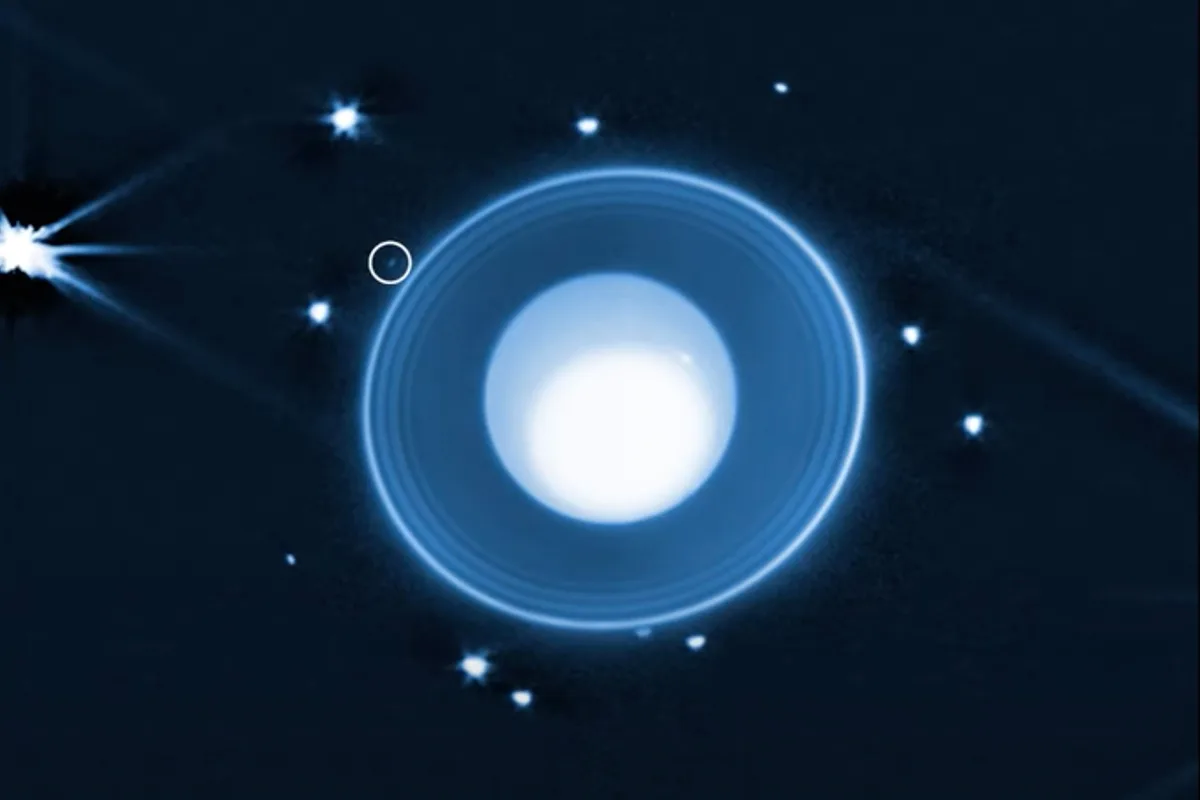
New observations from the James Webb Space Telescope are now providing an unprecedented view of Uranus’s upper atmosphere. By monitoring the planet for nearly a full rotation, astronomers were able to detect faint infrared emissions from ionised molecules thousands of kilometres above the cloud tops. These measurements allow scientists to map the structure of the planet’s ionosphere in three dimensions and study how its unusual magnetic field influences atmospheric processes.

