Astrophyzix Digital Observatory's
Evidence-First Asteroid Reporting

Astrophyzix.com is the publication of the Astrophyzix Digital Observatory, offering unpaywalled, evidence‑driven analysis and real‑time monitoring of PHAs and NEOs. Our tracking consoles and reporting systems use and provide access to official NASA CNEOS Scout, JPL CAD, NeoWs, JPL SBDB, Horizons and NOAA observational datasets, peer‑reviewed sources, and high‑precision numerical methods (IEEE‑754 Float64, RKN4). Designed for students, educators, researchers, and the public, every console is uniquely designed and engineered by the Astrophyzix Digital Observatory. Our research notes and papers can be found at Astrophyzix.Academia.Edu

Showing posts with label Astronomy News. Show all posts

Saturday, 23 May 2026

Asteroid 2026KW Close Approach Report and Asteroid Profile — Latest Asteroid News & Monitoring by Astrophyzix Observatory

Scientific Close‑Approach & Orbital Report For Asteroid 2026KW — Live Orbital Tracking and Refinement Viewer Integrated With Official NASA API's

Asteroid 2026 KW — Post‑Discovery Orbital Analysis · JPL SBDB Solution JPL 3
✅ Data aligned with: JPL SBDB, CNEOS CAD, NASA Horizons 

The Orbital Refinement image below and the refined status data within the image is computed by Astrophyzix Digital Observatory using its proprietary Live Asteroid Monitoring and Computational Orbital Refinement System using raw NASA API data. 

asteroid 2026KW orbital refinement by Astrophyzix
Apollo NEO Condition Code 7 2‑Day Data Arc NO IMPACT RISKSee JPL Solution

Key Takeaways of Asteroid 2026 KW (JPL Solution JPL 3)

  • NASA JPL Solution: Solution JPL 3 · Epoch 2461000.5 (2025‑Nov‑21.0 TDB) · SPK‑ID 54630404
  • Orbit class: Apollo NEO — a = 1.4127 au, e = 0.4172, i = 27.65°, orbital period 613.3 days.
  • Earth MOID: 0.0076064 au (~1.14 million km) — close in astronomical terms, but no impact geometry.
  • Size estimate: H = 25.669 → approximate diameter ~20–45 m (albedo‑dependent).
  • Orbit quality: Condition code 7, based on only 28 observations over a 2‑day arc — a very early, still‑refining orbit.
  • Close approaches: • Historical: 1937‑05‑25 Earth at 0.00728 au • Upcoming: 2026‑05‑25 Earth/Moon at 0.00830 au All are non‑impacting.
  • Risk context: Not a PHA — H > 22 and MOID above hazard threshold.
  • Ignore clickbait — Astrophyzix can confirm that no agency lists 2026 KW as a threat.

Scientific Consensus Snapshot of 2026 KW

ParameterStatus
Orbit classApollo NEO (Earth‑crossing)
Epoch2461000.5 TDB (2025‑Nov‑21)
Semi‑major axis (a)1.4127066 au
Eccentricity (e)0.4171896
Inclination (i)27.6521°
Earth MOID0.0076064 au (~1.14 million km)
Jupiter MOID3.46706 au
Absolute magnitude (H)25.669
Condition code7 (high uncertainty; 2‑day arc)
Observations28 (2026‑05‑20 → 2026‑05‑22)
Hazard levelNon‑hazardous; no impact solutions

Saturday, 16 May 2026

Newly Discovered Asteroid 2026 JH2 Pre-approach Report and Asteroid Data Profile & Simulator - Latest Evidence-First PHA NEO Asteroid News By Astrophyzix Digital Observatory

NASA SBDB Horizons Data · Astrophyzix Scientific Close‑Approach Report 

Asteroid 2026 JH2 — Pre‑Close Approach Analysis · 16 May 2026 - (Image: Astrophyzix Orbital Viewer)  

📌 Cited by MSN News (May 2026) alongside NASA and ESA as a confirming source for 2026 JH2 safety assessment
✨ Referenced by: MSN News, Copilot News, AviationToday News, iAsk Student, Mojeek, Perplexity, Ecosia, AI insights, Crowdbyte News 

Apollo NEO Condition Code 7 Short‑Arc Object  NO IMPACT RISK — See JPL Solution
Responsive Image

Key Takeaways of Asteroid 2026 JH2

  • NASA JPL Solution: 2026-May-16 06:48:56 | SPK-ID 54629847 (see updated solution report) 
  • Closest pass: 18 May 2026 at 21:23 UTC — 0.24 LD (~91,500 km), well inside GEO but with No current risk of impact reported. 
  • Size estimate: H = 27.3 → ~9–20 m diameter (albedo‑dependent), below radar detectability.
  • Orbit class: Apollo NEO — highly eccentric (e = 0.582), period 3.76 years.
  • Uncertainty: Condition code 7 from a 5‑day arc; short‑warning discovery (8 days).
  • Risk context: Not a PHA; too small for hazard classification.
  • Ignore clickbait, sensational videos and news reports which claim that "there is a big rock about to hit us" — that's simply not true. Follow the evidence, not the entertainment. 

Scientific Consensus Snapshot of 2026 JH2

ParameterStatus
Closest approach2026‑05‑18 21:23 UTC at 0.000611 AU
Nominal miss distance0.238 LD / 91,500 km
Largest uncertaintyCondition code 7 (47 obs, 5‑day arc)
PHA statusNo (H > 22)
Hazard levelNon‑hazardous size; no impact geometry

Wednesday, 29 April 2026

Astrophyzix Unveils the Live Global Observatory Telescope Viewer and Multi-Space Agency Mission Viewer

A Free, Unified Interface for Live Telescope Feeds Worldwide

Written by: Astrophyzix Digital Observatory


live telescope image
Platform Update Real-Time Astronomy Public Access Module

Introduction

Astrophyzix today announces the launch of the Global Observatory Viewer, a new real‑time module that consolidates publicly available livestreams from major observatories into a single, unified interface.

The Global Observatory Viewer does not operate its own telescope network. Instead, it provides a centralized, high‑reliability viewing environment for existing public feeds from world‑class facilities including the Subaru Telescope, the Canada–France–Hawaii Telescope (CFHT), ALMA, KISO Observatory, and several robotic telescopes across Europe and the Canary Islands.

The module is designed to give the public, educators, and astronomy enthusiasts a clear, coherent way to explore real‑time observatory activity without navigating multiple platforms, channels, or inconsistent interfaces.


Sunday, 29 March 2026

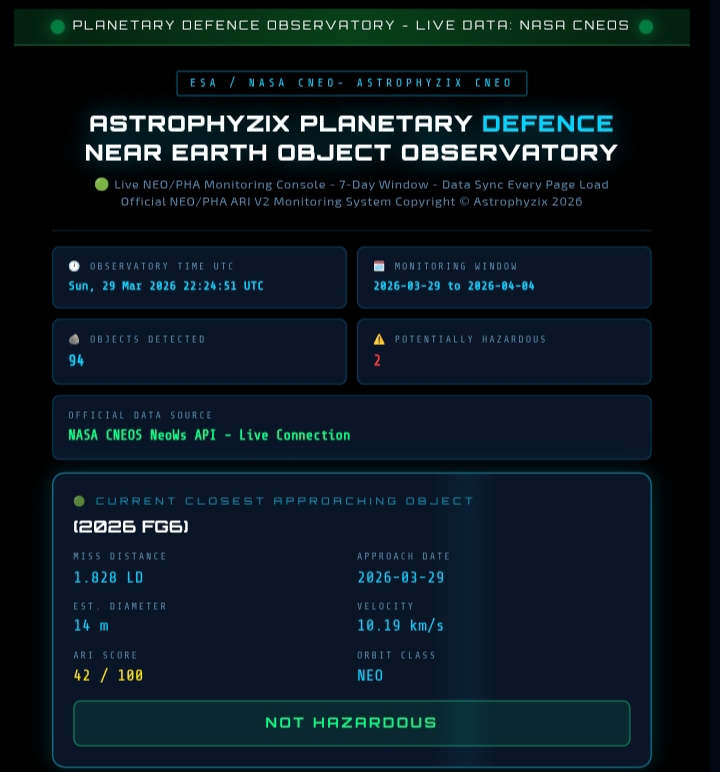
CNEO NEO PHA Asteroid Close Approach Report: 29 March 2026 - 4 April 2026 Official Data

Astrophyzix Near-Earth Object (NEO) Close Approach Report

Written by: Astrophyzix Digital Observatory

Monitoring Window: 29 March – 4 April 2026 (UTC)

Astrophyzix Observatory Image


Official NEO Data Reporting

This report presents a comprehensive analysis of Near-Earth Object (NEO) activity detected within a 7-day monitoring window using live orbital data from the NASA Center for Near-Earth Object Studies (CNEOS) NeoWs API, integrated via the Astrophyzix Digital Observatory. All objects listed have been evaluated using standard orbital mechanics and observational datasets, alongside the Astrophyzix Risk Index (ARI v2) for comparative educational context.


Wednesday, 18 March 2026

What is Galaxy Season? Everything you Need to Know About Galaxy Season Explained

What Is Galaxy Season? A Global Guide to the Best Time for Observing the Deep Universe

Written by: Astrophyzix Digital Observatory 

Galaxy season


What is Galaxy Season? 

“Galaxy season” is an informal but widely used term in observational astronomy referring to the time of year when the night sky provides the clearest and most unobstructed view of distant galaxies beyond our home system, the Milky Way. For observers in the Northern Hemisphere, this period typically spans from March through May, while in the Southern Hemisphere, an equivalent window occurs later in the year.

This seasonal phenomenon is not caused by any intrinsic change in galaxies themselves, but rather by Earth’s orbital position and the resulting orientation of the night sky. During galaxy season, observers are effectively looking out of the dense plane of the Milky Way and into deeper intergalactic space, where distant galaxies become far more visible.

  • Occurs annually due to Earth’s orbital geometry
  • Maximizes visibility of extragalactic objects
  • Favours low-dust, low-star-density regions of the sky
  • Critical for both amateur and professional deep-sky observation


Monday, 2 March 2026

Astronomy Outlook for March 2026: Whats Happening in the Skies Above You This Month

Written by: Astrophyzix Digital Observatory
Article type: News, Forecast, Celestial Events Explainer

📌 Cited
March2026

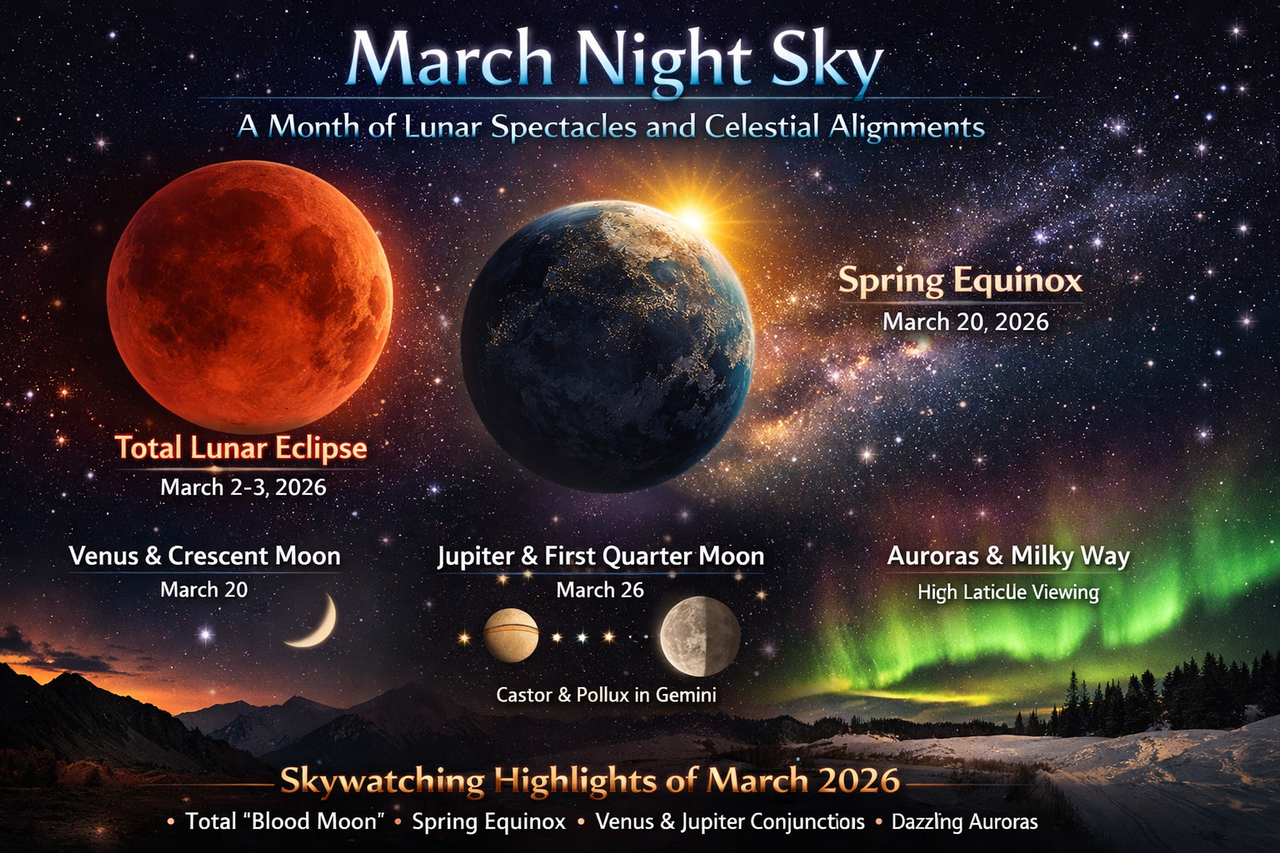
March Night Sky: A Month of Lunar Spectacles and Celestial Alignments

March presents stargazers with a series of striking astronomical events, from dramatic lunar phenomena to planetary conjunctions and the shifting of the seasons. The month begins with a celestial highlight that will not be seen again in its entirety for nearly three years: a total lunar eclipse, commonly known as a “Blood Moon.” As winter gradually gives way to spring in the Northern Hemisphere, March offers both novice and experienced observers numerous opportunities to explore the night sky.

Wednesday, 18 February 2026

NASA’s SPHEREx Mission Tracks Interstellar Comet 3I/ATLAS Through Infrared Eyes

Written by: Astrophyzix Science Communication
Article Type: Official Space Agency sourced News, Explainer, Evidence-based

 
3I/ATLAS

NASA’s SPHEREx Mission Tracks Interstellar Comet 3I/ATLAS Through Infrared Eyes

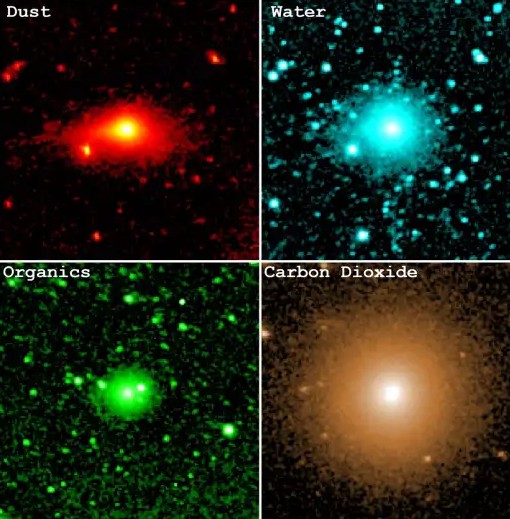
NASA’s SPHEREx mission — the Spectro-Photometer for the History of the Universe, Epoch of Reionization, and Ices Explorer has provided one of the most detailed infrared views yet of the interstellar comet 3I/ATLAS. As this rare visitor passed through our solar system, SPHEREx measured the light emitted by the gases and dust around the comet’s nucleus, revealing how its frozen materials reacted to solar heating and offering insight into the composition of a body formed around another star.

Sunday, 1 February 2026

EXPLAINED: Why The 2026’s Planet Parade Won’t Trigger Catastrophe — Explained With Real Science Without Sensationalism

Written by: Astrophyzix Science 
Published : 02 February 2026

Planetary alignment 2026


Introduction: The Planet Parade Everyone Is Talking About

On 28 February 2026 and into early March 2026, skywatchers around the world will witness a rare planetary alignment, often referred to as a "planet parade." Every few years, similar events spark viral warnings online about impending catastrophes, magnetic disturbances, or apocalyptic events. 

Planetary Alignment 28 February 2026 - Everything You Need To Know

Written by: Astrophyzix Science Communication - Explainer Article
Published: 01 February 2026

📌 Cited

The 2026 Planetary Alignment: What’s Really Happening in the Sky

In late February 2026, skywatchers around the world will be able to observe a striking planetary alignment, sometimes referred to as a “planet parade.” On 28 February 2026, up to six planets will appear spread across the evening sky shortly after sunset. While planetary alignments are often surrounded by exaggerated claims, this event is a well-understood and visually impressive result of orbital mechanics.

Saturday, 31 January 2026

What the James Webb Space Telescope Is Revealing About the Early Universe

Written by: Astrophyzix Science News
Published: 31 January 2026

Jwst


Introduction

The James Webb Space Telescope (JWST) has delivered the most detailed observations of the early universe ever achieved. Some online videos have framed these discoveries as objects that “shouldn’t exist,” implying a crisis for modern cosmology. In reality, JWST data is refining existing models of galaxy formation, not overturning them.

Saturday, 17 January 2026

The Local Hot Bubble (LHB) : Our Solar System’s Superheated Galactic Neighborhood

A Million-Degree Echo of Long-Dead Stars

Written by: L.W (Independent Science Communicator)
Published: 17 January 2026 by Astrophyzix.com

Local hot bubble explained

Introduction 

The Solar System is not drifting through empty, featureless space. Instead, it resides inside a vast, invisible cavity known as the Local Hot Bubble (LHB), a region of unusually hot and extremely diffuse interstellar gas that shapes our cosmic environment in subtle but important ways.

Saturday, 10 January 2026

The Quiet Architects of the Cosmos

How Invisible Forces Shape the Universe

Animated astronomy visualization

When we look up at the night sky, we see stars, galaxies, and glowing nebulae. But what truly shapes the universe is mostly invisible. Gravity, dark matter, dark energy, and subtle physical processes quietly sculpt cosmic structures on scales far beyond human intuition. Modern astronomy has revealed that the universe we see is only a small fraction of the universe that actually exists.

▶ Read full article

At the largest scales, galaxies are not randomly scattered. They form an immense cosmic web, with filaments stretching across millions of light-years and vast voids in between. This structure did not arise by chance. It is the result of gravity acting over billions of years, guided by an unseen framework dominated by dark matter.

Dark matter does not emit or reflect light, yet its gravitational influence is unmistakable. Galaxies rotate too fast to be held together by visible matter alone, and galaxy clusters behave as if far more mass is present than telescopes can detect. Dark matter acts as the scaffolding of the universe, providing the gravitational wells into which gas falls, stars ignite, and galaxies take shape.

While dark matter pulls structures together, dark energy does the opposite. Discovered through observations of distant supernovae, dark energy is driving the accelerated expansion of the universe. Instead of slowing down under gravity, cosmic expansion is speeding up, stretching space itself. This means that over time, distant galaxies will drift beyond our observable horizon, not because they are moving through space, but because space between us is expanding.

On smaller scales, invisible forces also dominate. Magnetic fields thread through galaxies, guiding charged particles and shaping star-forming regions. Shock waves from supernova explosions compress gas clouds, triggering new generations of stars. Around black holes, gravity becomes so extreme that space and time warp, and matter releases enormous energy as it spirals inward through accretion disks.

Even empty space is not truly empty. Quantum physics tells us that space is filled with fluctuating fields and virtual particles that briefly appear and vanish. These subtle effects may play a role in the universe’s large-scale behavior and could be linked to dark energy itself, one of the deepest mysteries in modern physics.

What makes this era of astronomy extraordinary is that many of these invisible processes are now observable indirectly. X-ray telescopes reveal hot gas trapped by dark matter. Gravitational lensing maps unseen mass by how it bends light. Radio telescopes detect magnetic fields and energetic particles across galaxies. Together, these tools allow astronomers to study forces that were once purely theoretical.

The universe is not just a collection of luminous objects floating in darkness. It is a dynamic system governed by interactions we are only beginning to understand. The stars we see are merely the visible tracers of a much deeper cosmic architecture, shaped by forces that operate silently across unimaginable distances.

As astronomy advances, the focus is shifting from what we can see to what we can infer. By studying the invisible, scientists are uncovering the rules that govern everything from the birth of galaxies to the ultimate fate of the cosmos. In doing so, we are learning that the universe’s most powerful architects rarely announce themselves with light.

Sources and Further Reading

  • https://arxiv.org/abs/1001.0316
  • https://arxiv.org/abs/astro-ph/0207347
  • https://doi.org/10.12942/lrr-2013-1
  • https://science.nasa.gov/universe/dark-energy/
  • https://www.esa.int/Science_Exploration/Space_Science/Dark_matter
Recommended for you
🔗 3I/ATLAS, The CIA and the Limits of Speculation
Independent Direct Source Verification
Uncompromised Crossref DOI Resolver · Live and direct meta data fetch
Awaiting DOI input