
Astrophyzix Observatory
Evidence-First Publication

Astrophyzix.com is an independent digital observatory publication offering unpaywalled, evidence‑driven analysis and real‑time monitoring of PHAs and NEOs. Our tracking consoles and reporting systems use and provide access to official NASA CNEOS Scout, JPL CAD, NeoWs, JPL SBDB, Horizons and NOAA observational datasets, peer‑reviewed sources, and high‑precision numerical methods (IEEE‑754 Float64, RKN4). Designed for students, educators, researchers, and the public, every console is uniquely designed and engineered by the Astrophyzix Digital Observatory. Our research notes and papers can be found at Astrophyzix.Academia.Edu

Showing posts with label DOI Sourced. Show all posts

Thursday, 14 May 2026

Asteroid Apophis 2029 Flyby Scientific Report - What NASA JPL Data Says In 2026 - Asteroid News Without the Hype - Updated 14/05/26

Asteroid (99942) Apophis — 2026 NASA-Verified Scientific Status News Report
NASA JPL SBDB Solution Date: 2024‑Jun‑25 10:48:08 | Epoch 2461000.5 (2025‑Nov‑21.0) 

Researched, Written and Published by: Astrophyzix Digital Observatory 

β„Ή️ No Hype, No Speculation, No Sensationalism - Credible Asteroid News With Clarity - Strict Editorial Standards - Fully Verifiable Sources 

⭐ This report has been featured and cited as the primary source by MSN News in 15 individual news articles. 

πŸ†™ This report is updated when new agency data is released or updated. 

Responsive image
Reading Time: ~12 min Primary Data: NASA CNEOS / JPL SBDB / JPL Horizons

Classification: Near-Earth Object (Potentially Hazardous Asteroid) Evidence-First Report

πŸ“Œ Cited by MSN News | Bing Copilot | iAsk Student | Google AI | Google Overview

Apophis 2029 Flyby Key Takeaways

  • No impact risk: NASA’s current orbital solutions for Apophis show zero impact probability for at least the next 100 years.[1]
  • The 2029 flyby: Using official NASA data, Astrophyzix can confirm that on Friday 13 April 2029, Apophis will pass at about 32,000 km above Earth’s surface (about 20,000 miles), closer than geostationary satellites but on a safe, non-impact trajectory.[1],[2]
  • Impact Risk removed: Astrophyzix can conform that high-precision radar observations in 2020–2021 allowed NASA to rule out all impact scenarios for 2029, 2036, and beyond within the 100‑year assessment window.[1],[3]
  • New Science opportunity: The upcoming 2029 encounter is now treated as a science scenario, not a hazard scenario. Astrophyzix Digital Observatory is looking forward to observing and studying this asteroid in 2029 during the flyby event.
  • A Benchmark object: Apophis is used as a reference case in planetary defence simulations, mission design studies, and public‑communication exercises.[4]

Tuesday, 10 March 2026

The “Hollow Moon” Hypothesis: A Scientific Examination and Explainer of a Persistent Lunar Myth

Key Takeaways (🚨 Spoiler Alert)
πŸ“Œ Cited
 

  • The Moon is not hollow. Seismic data from Apollo missions show waves travelling through solid internal layers.
  • Modern analyses reveal the Moon has a crust, mantle, and metallic core similar to other rocky planetary bodies.
  • Gravity measurements from spacecraft such as GRAIL detect dense internal structures inconsistent with a hollow interior.
  • Lunar rock samples confirm the Moon formed naturally through planetary processes following a giant impact with Earth.
  • All current geophysical, gravitational, and geochemical evidence strongly supports a solid differentiated lunar interior.
⏱ Estimated Reading Time: 15 minutes
✔ Evidence-Based Myth Correction Article
πŸ”· Written By: Astrophyzix Science Communication
πŸ“š Peer-Reviewed DOI Sources

The “Hollow Moon” Hypothesis: A Scientific Examination of a Persistent Lunar Myth

The idea that Earth’s Moon might be hollow has circulated for decades within fringe literature, conspiracy forums, and pseudoscientific media. Variations of the claim suggest the Moon is either an artificial structure, a massive alien spacecraft, or a naturally hollow celestial body containing large internal cavities. While such ideas can appear intriguing in speculative storytelling, they do not withstand examination using modern planetary science methods.

Friday, 20 February 2026

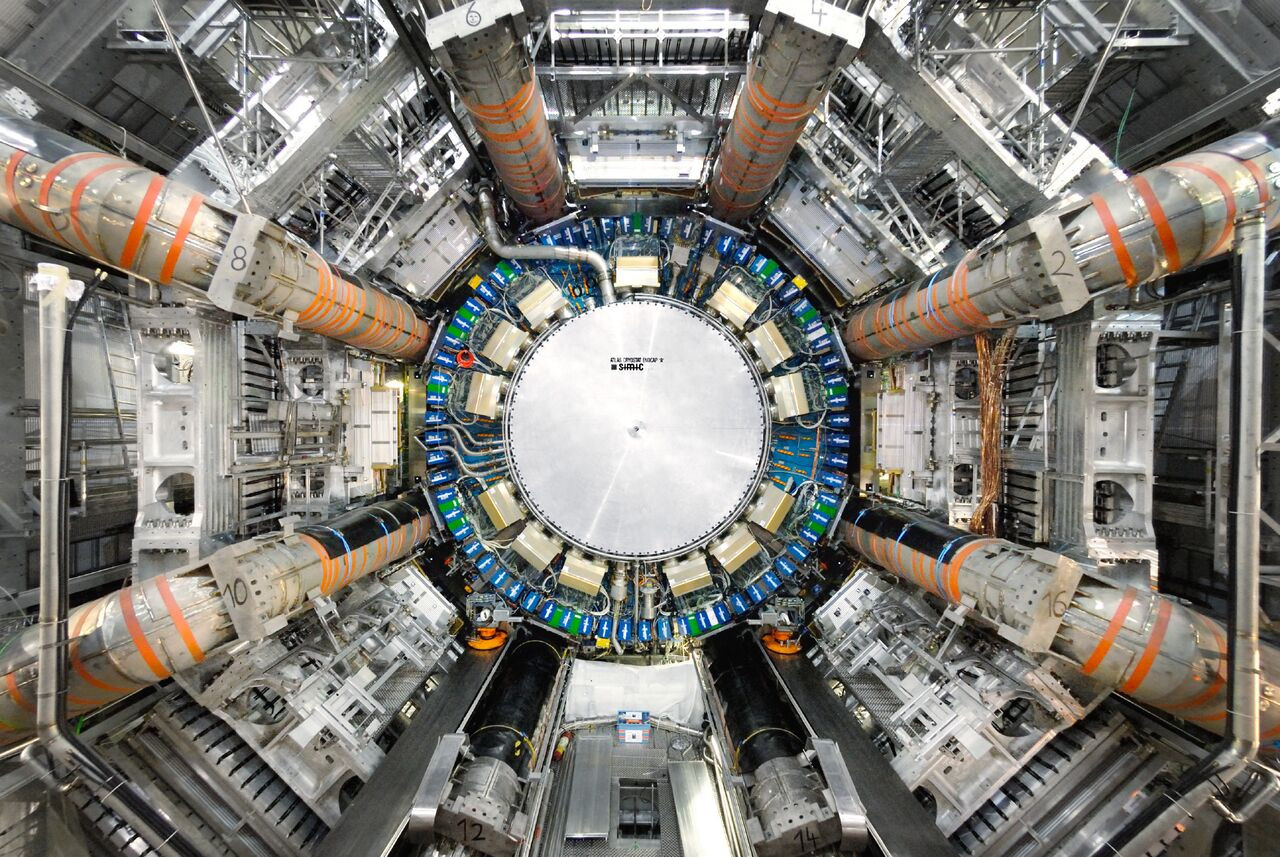
The Large Hadron Collider at CERN: The Worlds Most Powerful Machine for Exploring Fundamental Physics

πŸ“Œ Cited

Written By: Astrophyzix Science Communication
Article type: Explainer, Deep-Dive, Doi Sourced, Official CERN 


Lhc cern

Introduction to The Large Hadron Collider

The Large Hadron Collider operated by the European physics laboratory CERN represents the most advanced experimental instrument ever constructed for studying the fundamental structure of matter. Built to probe energy regimes previously unreachable in controlled laboratory conditions, the collider allows physicists to experimentally test quantum field theory, the Standard Model, and candidate theories describing physics beyond known particles and forces. 

Independent Direct Source Verification
Uncompromised Crossref DOI Resolver · Live and direct meta data fetch
Awaiting DOI input